Why Choose Radium
As the pioneer of SNG in Bangladesh, Radium Resource Ltd. holds the distinction of completing the nation's first commercial SNG project. Our team possesses unparalleled technical expertise in SNG integration, working directly with global manufacturers to ensure high-performance solutions. By eliminating intermediaries, we provide transparent, factory-direct pricing and technical clarity. At Radium, we don't just sell equipment; we provide cost-effective, customized energy solutions tailored to your factory's specific demands and available resources.
What is SNG
Synthetic Natural Gas (SNG) is a mixture of LPG and Compressed Air.
In the year 1927, Goffredo Wobbe developed the Wobbe Index, a formula derived from a gas's calorific value and specific gravity. This index is used to compare the flow characteristics of different gases; if two gases share the same Wobbe Index, they are considered interchangeable for use in a given burner without requiring adjustments to the equipment.
Benefits of SNG
SNG is directly compatible and interchangeable with Natural Gas. This allows users to switch back and forth between Natural Gas and LPG based backup fuel without having to change the setup of any of their process or heating equipment such as Burners, Boilers, Heater, Dryers, Kilns, Drum ovens etc.
✓ Directly compatible with Natural Gas
✓ No Equipment Changeover
✓ No Risk of Production Interruption
✓ Local Fuel Storage
✓ Reduce Carbon Footprint
✓ Automatic Operation
Think Before you Buy
While SNG can be a highly efficient solution for your factory, success depends entirely on selecting the right system. Choosing the wrong setup can lead to long-term operational challenges—especially in the ceramics, glass, biscuit and some other industries, where even minor fuel fluctuations significantly impact product quality. Many suppliers lack a deep technical understanding of SNG and may inadvertently misguide you, providing an improper system that is ultimately unsuitable for your specific production needs.
Can a Generator run on SNG?
This is a critical question with a nuanced answer: it depends on the Generator manufacturer.
SNG is considered interchangeable with natural gas for “external” combustion, such as burners, boilers, ovens, heaters, kilns, etc. For a given orifice at a given pressure, SNG will deliver the same amount of energy to a burner per unit time as natural gas.
When considering internal combustion such as generators and engines, SNG is not considered interchangeable with natural gas. The methane number and compressibility factors of the two fuels differ. It is up to individual engine manufacturers to determine whether SNG is an acceptable fuel and what if any changes are necessary to accommodate it (changing ignition timing, de-rating engine performance, preferring LPG vapor over SNG. This is a function of physics of combustion and has nothing to do with a specific SNG equipment manufacturer’s technology. Ultimately, unless the generator manufacturer provides explicit approval and guidance, SNG should not be used in a standard natural gas engine.
Types of SNG Mixer
There are two primary SNG mixing technologies available on the market:
Low-Pressure SNG Mixers (Venturi Type): These blenders typically produce an output of up to 8 psi. They do not require an external compressed air source, as they utilize the energy of the LPG vapor to draw in atmospheric air.
High-Pressure SNG Mixers: These systems can produce an output of up to 100 psi. Unlike low-pressure units, these are designed for high-demand applications and utilize controlled mixing to maintain stability at higher pressures.
SNG Manufacturing Technologies
At Radium Resource Ltd., we specialize in the three primary mixing technologies used to produce Synthetic Natural Gas. Each has specific applications depending on your factory’s scale and precision requirements:
-
Piston-Operated SNG Mixers
-
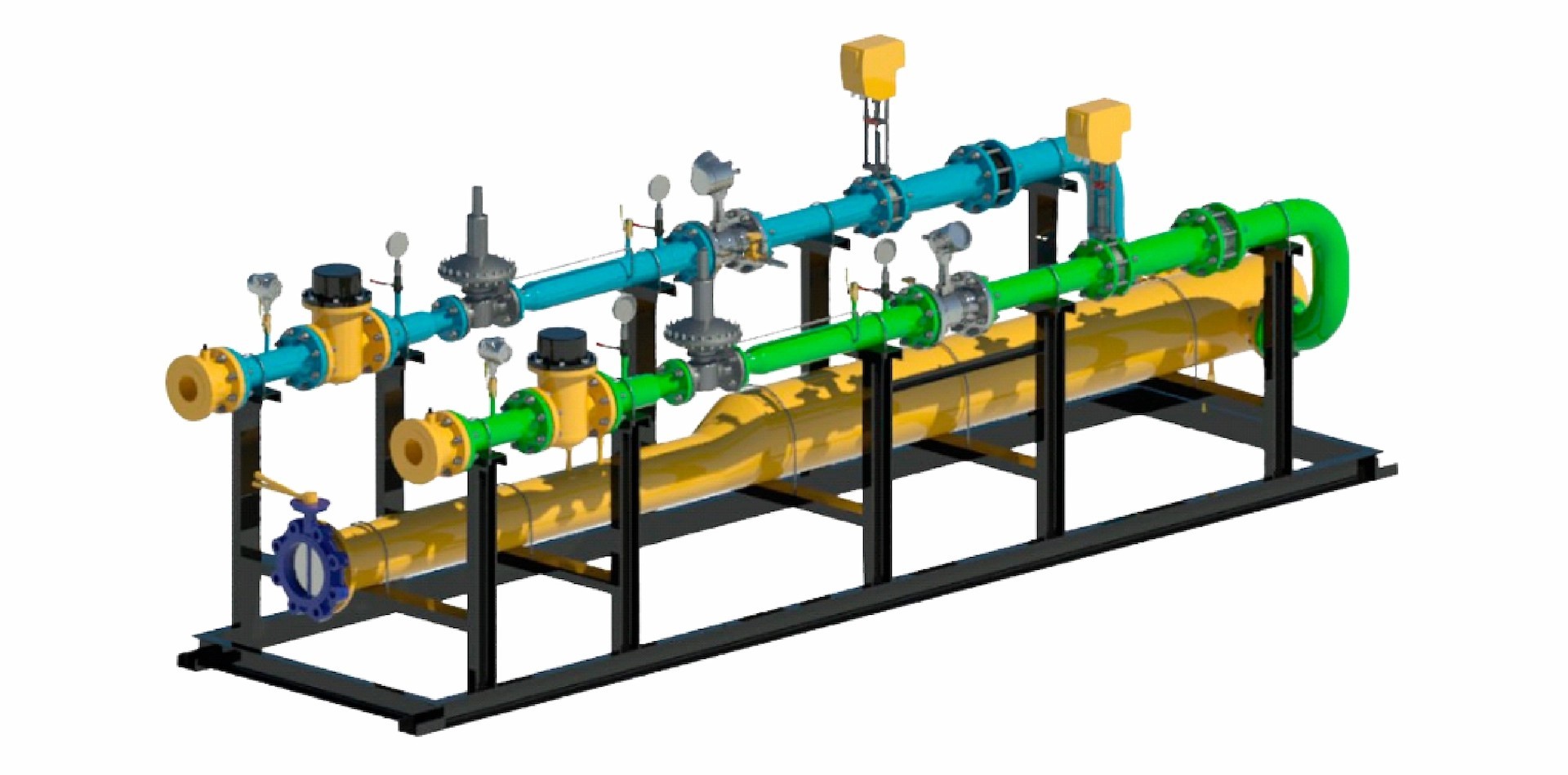
Flow-Meter Type SNG Mixers
-
Floating Variable Orifice (FVO) or Consta-Mix (CM) Mixers
Selecting the wrong mixing principle can lead to long-term operational inefficiencies. Contact us today for a detailed technical comparison of the advantages and disadvantages of each system. We will help you identify which technology is the perfect fit for your specific production needs.
Typical SNG System Components
- LPG Unloading Compressor (Optional)
- LPG Flow Meter (Optional)
- LPG Storage Tank
- LPG Transfer Pump (If needed)
- Control Panel
- Vaporizer
- Hot Water Pump (If needed)
- Pressure Regulating System (Additional not required, This is built-in features for all SNG Mixer)
- Air Compressor
- SNG Mixer
- Control Panel (Included in the SNG)
- Accublend Automatic Ratio Controller (Optional)
- GraviBlend Gravitomer (Optional)
- Flare Stack (Optional)
- Flow Meter (Optional)
- Surge Tank